

Link building is defined as the practice of earning hyperlinks from external websites to your own, with each link signaling to Google that your site is credible and worth ranking. Search engines treat these backlinks as votes of confidence. The more authoritative the site linking to you, the stronger that vote counts. For small and medium-sized business owners, understanding this process is the difference between showing up on page one and being invisible online. This guide covers what link building is, why it matters, which techniques work in 2026, and which practices will get you penalized.
What is link building and why does it matter for your business?
Link building is the SEO practice of acquiring inbound hyperlinks, also called backlinks, from other websites to yours. Google’s PageRank system was built on this concept: links from authoritative domains act as strong trust signals that push your pages higher in search results. One link from a respected industry publication outweighs dozens of links from low-quality directories. That gap in value is why your link building strategy matters more than your link count.
Backlinks do more than boost rankings. They drive referral traffic directly to your site, introduce your brand to new audiences, and build the kind of online reputation that compounds over time. A local Chicago contractor featured in a regional business journal gets a backlink and a new pool of potential customers reading about them. Those two outcomes, SEO authority and brand exposure, arrive together.

Modern link building is a hybrid of SEO and digital PR, built on Google’s E-E-A-T framework: experience, expertise, authoritativeness, and trustworthiness. That framework shapes how Google evaluates not just your content, but the sites choosing to link to you. If authoritative, relevant sites link to your pages, Google reads that as confirmation that your business deserves visibility.
How modern link building works: quality over quantity
The old approach to backlinking treated link building as a numbers game. Webmasters bought links in bulk, joined private blog networks, and submitted sites to hundreds of directories. Google’s algorithm updates, particularly Penguin and its successors, ended that era. Manipulative link schemes now trigger manual penalties, de-indexing, and ranking drops that can take months to recover from.
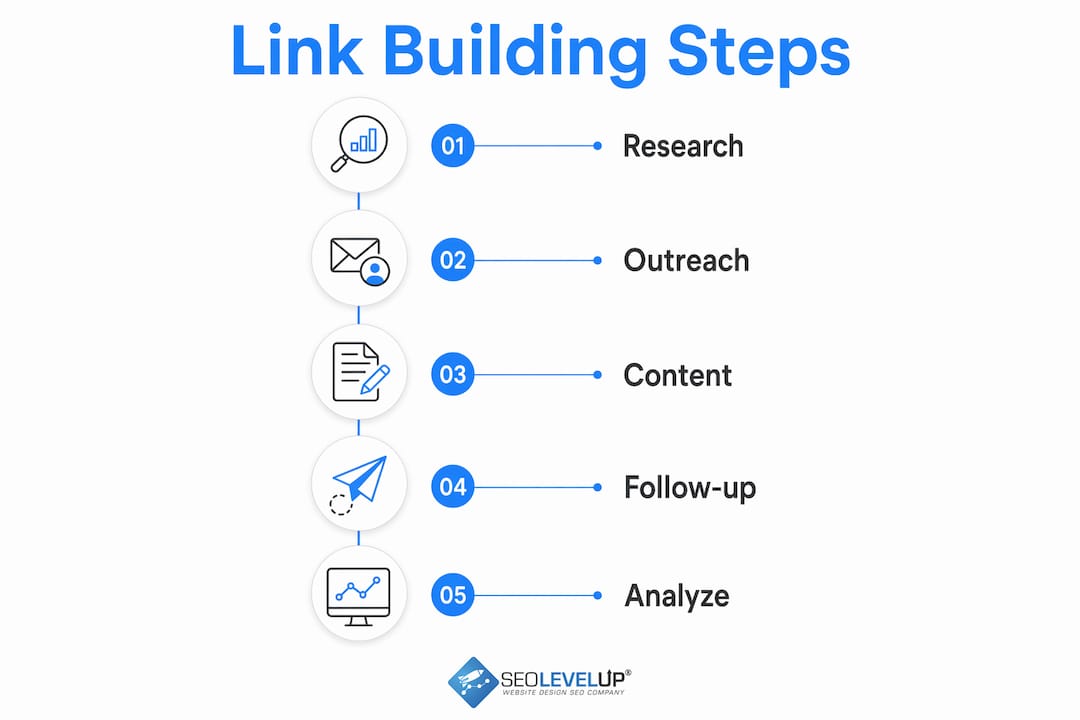
Today’s best link building practices center on earning links naturally by creating content worth citing. That shift changes everything about how you approach outreach and content creation. You are no longer chasing links. You are building a reputation that makes links a byproduct.
White-hat link building follows a clear set of principles:
- Earn links editorially. Publish original research, expert commentary, or data that journalists and bloggers want to reference.
- Build genuine relationships. Connect with industry peers, local organizations, and media contacts before you need a link.
- Prioritize relevance. A link from a site in your industry carries more weight than a link from an unrelated site with high domain authority.
- Disclose paid placements. Any paid or sponsored link must carry a
rel="sponsored"orrel="nofollow"tag to comply with Google’s policies. - Audit your backlink profile regularly. Remove or disavow toxic links that could drag down your rankings.
Pro Tip: Before you pitch any site for a link, read three to five of their recent articles. Editors notice when your outreach matches their editorial voice, and that attention dramatically improves your acceptance rate.
Key link building strategies and techniques for SMBs in 2026
Small and medium-sized businesses do not need a massive content team to build strong backlinks. The most effective techniques are within reach for any business willing to invest consistent effort.
-
Create linkable assets. Publish original data, local market reports, or expert guides that other sites want to reference. A Chicago plumbing company that publishes annual data on local water quality issues gives journalists a reason to link back.
-
Guest blogging and expert commentary. Guest blogging and expert roundups earn authoritative backlinks while increasing brand awareness and referral traffic. Pitch relevant industry blogs or local news outlets with a specific, well-researched topic idea.
-
Broken link building. Find pages on authoritative sites that link to dead URLs, then suggest your content as a replacement. Broken link building helps editors maintain quality references, which makes your outreach genuinely useful rather than self-serving.
-
Resource page inclusion. Many industry associations, universities, and local chambers of commerce maintain resource pages. Getting listed on a relevant resource page earns a clean, editorial link with strong topical authority.
-
Digital PR and community engagement. Sponsor a local event, partner with a nonprofit, or participate in a community initiative. These activities generate press coverage and organizational links that no cold outreach campaign can replicate.
Pro Tip: When doing broken link outreach, use a tool like Google Search Console to identify which of your existing pages already attract organic traffic. Those pages make the strongest replacement suggestions because they have proven relevance.
The table below compares three common link building approaches by effort level and expected link quality.
| Approach | Effort level | Expected link quality |
|---|---|---|
| Guest blogging | Medium | High, editorially placed |
| Broken link building | Medium | High, contextually relevant |
| Directory submissions | Low | Low to medium |
| Digital PR and press | High | Very high, authoritative |
| Resource page outreach | Low to medium | High, topically relevant |
Common mistakes and pitfalls in link building to avoid
The most damaging link building mistakes are not always obvious. Many business owners pay for link placements without adding the required rel="sponsored" tag, which Google treats as a violation of its webmaster guidelines. Untagged paid links and link schemes risk Google penalties including de-indexing and manual actions that remove your site from search results entirely.
Quantity-focused thinking is the second major trap. Chasing raw link counts leads businesses toward low-quality directories, irrelevant blog networks, and link exchanges that dilute rather than build authority. High-quality backlinks from authoritative domains rank sites higher. Ten links from respected, relevant sites beat 500 links from unrelated or spammy sources every time.
Watch for these specific red flags in your backlink profile:
- Links from sites with no real content or editorial standards
- Sudden spikes in backlinks from unrelated foreign-language sites
- Links buried in site-wide footers or sidebars with exact-match anchor text
- Any link acquired through a private blog network or link exchange scheme
Pro Tip: Set up Google Search Console alerts and review your backlink profile monthly. Catching a toxic link early, before it accumulates, is far easier than filing a disavow request after a penalty hits.
How do you measure link building success?
Metrics like domain authority, referral traffic, and organic ranking changes are the primary indicators of link building success. No single metric tells the full story, so tracking all three together gives you a clear picture of whether your efforts are working.
Referral traffic shows you which links are actually sending visitors to your site. Organic ranking changes confirm whether new backlinks are moving your target keywords. Domain authority, while a third-party metric rather than a Google metric, tracks the overall strength of your backlink profile over time.
| Metric | What it measures | Why it matters |
|---|---|---|
| Domain authority | Overall backlink profile strength | Benchmarks your site against competitors |
| Referral traffic | Visitors arriving via backlinks | Shows which links drive real business value |
| Organic ranking position | Keyword position in search results | Confirms SEO impact of new links |
| New referring domains | Count of unique sites linking to you | Tracks growth in link diversity |
Link building integrated with content marketing and digital PR produces compounding SEO benefits over time. A single well-placed article can earn links for years. That compounding effect is why consistent effort outperforms short-term campaigns every time. Align your link building calendar with your content publishing schedule, and treat every piece of content as a potential link asset.
Key Takeaways
Link building is the single most effective off-page SEO practice for improving search rankings, and quality, relevance, and relationship-building determine long-term success far more than link volume.
| Point | Details |
|---|---|
| Quality beats quantity | One link from a relevant, authoritative domain outweighs dozens of low-quality links. |
| White-hat practices protect rankings | Avoid paid links without proper tags and link schemes to prevent Google penalties. |
| Relationships drive durable links | Links from partners, customers, and collaborators carry stronger editorial value than cold outreach. |
| Measure three core metrics | Track domain authority, referral traffic, and organic ranking changes to evaluate progress. |
| Integration compounds results | Combining link building with content marketing and digital PR produces lasting SEO gains. |
Why relationship-based link building is the only strategy worth your time
I have worked with enough small businesses to know that most link building advice misses the point entirely. The conversation almost always focuses on tactics: guest posts, broken links, resource pages. Those tactics work, but only when they are built on something real.
The most durable links come from people who already know and trust your organization, not from cold outreach campaigns. I have watched businesses spend thousands on link packages and see minimal ranking movement. Then a single mention in a local business journal, earned through a genuine community relationship, moves the needle more than six months of transactional outreach.
The businesses that win at link building treat it as reputation management, not a technical checkbox. They publish content that reflects real expertise. They show up in their industry community. They build the kind of trusted brand authority that makes other sites want to reference them. That mindset shift, from “how do I get links” to “how do I become worth linking to,” is what separates sustainable rankings from short-term gains.
My honest advice: start with the relationships you already have. Your vendors, your industry associations, your satisfied customers. Ask them to link to a specific resource on your site that genuinely helps their audience. That one conversation, done consistently, builds a backlink profile that no algorithm update can take away.
— Tommy Seilheimer
How SEOLEVELUP, LLC Website Design SEO Company supports your link building goals
Building a strong backlink profile requires a website that earns links in the first place. SEOLEVELUP, LLC Website Design SEO Company builds fast, custom websites designed to rank and attract editorial links from authoritative sources. Every site we build is backed by managed local SEO services that include ongoing link building, content strategy, and backlink profile monitoring tailored for small and medium-sized businesses.

Our team handles the outreach, the content, and the technical compliance so you stay focused on running your business. Trusted with 165+ five-star reviews and heard on ESPN1000, SEOLEVELUP, LLC Website Design SEO Company delivers custom website design built to support every layer of your SEO strategy. Call us for a free SEO audit at (224) 600-4353.
FAQ
What is link building in SEO?
Link building is the process of earning hyperlinks from external websites to your own. Search engines like Google treat these backlinks as trust signals that influence your search ranking position.
What is the difference between link building and backlinking?
Link building is the active process of acquiring backlinks. Backlinking refers to the backlinks themselves. Both terms describe the same SEO concept from different angles.
How many backlinks does a small business need?
There is no fixed number. Link quality and relevance matter far more than volume. A small business with ten links from authoritative, relevant sites will outrank a competitor with hundreds of low-quality links.
What link building techniques are safest for SMBs?
Guest blogging, broken link building, resource page outreach, and digital PR are the safest and most effective techniques. All comply with Google’s webmaster guidelines when executed without paid placements or deceptive practices.
How long does link building take to show results?
Most businesses see measurable ranking improvements within three to six months of consistent link building. Results compound over time, making early and sustained effort the most reliable path to long-term visibility.


